
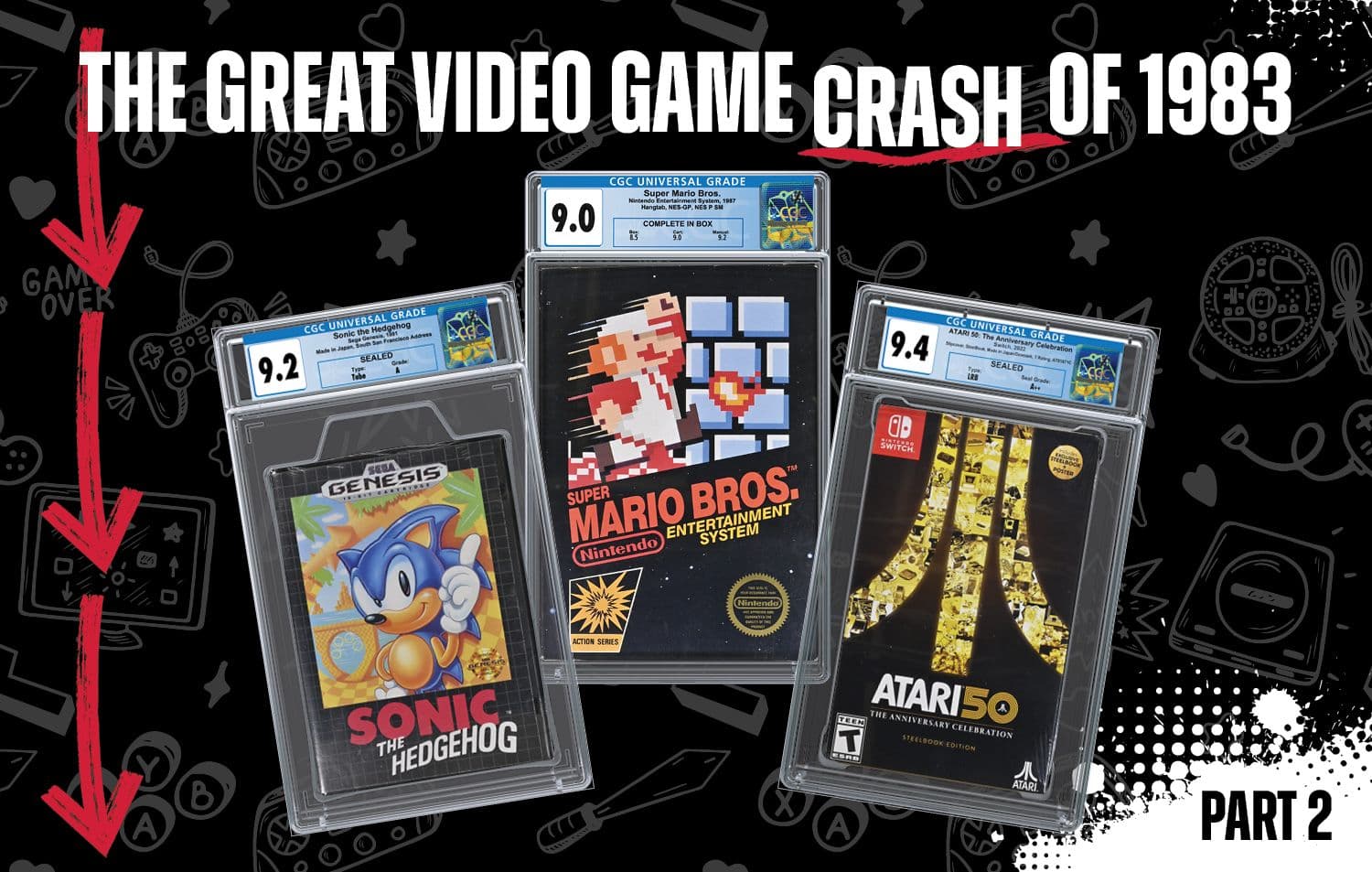
Last month, we talked about the events that led up to the North American video game crash of 1983, including the rise of personal computers and the oversaturation of low-quality video games in the market (you can read Part 1 here). The effects of the crash came swiftly and struck a hard blow to Atari and other manufacturers, but the video game industry was resilient. Read on to learn more.
At the beginning of 1983, the North American video game market peaked at a massive $3.2 billion (equivalent to approximately $10.4 billion in 2025). The flooding of the video game market and other factors led to a crash that saw the revenue of the industry crash down to a measly $100 million (equivalent to $325 million in 2025). That’s a drop of nearly 97% in just one year.
With such a massive drop in revenue, it’s no wonder that many US-based publishers folded. U.S. Games — the developer behind Sneak ’n Peek, who was acquired by Quaker Oats — was one such studio to crumble because they were unable to pay back the retailers who were trying to return the stacks of unsold games to them.
Suddenly, because these studios no longer existed, retailers could no longer return unsold games to recoup their spent money. In an effort to make some sort of money back, many stores simply marked down these un-returned games and threw them in discount bins. Customers that passed through the video game sections of retail shops were drawn to the heavily discounted games (that were often poorly made) and began to buy them, drawn in by the price rather than the quality of the product. These third-party sales drew profits away from developers, leading to an industry shakeout.
Several companies, including Magnavox, abandoned the video game industry entirely. Others moved from producing cartridge-based games to focus only on PC games. Atari was the most heavily impacted by the crash. By mid-1983, the company had lost more than $350 million in revenue, moved all manufacturing out of the US and laid off thousands of employees. As unsold games piled up in their warehouse, Atari struck deals to get rid of them — even going as far to bury them in a New Mexico landfill (you can read more about that here).
By 1985, the video game industry was on its knees and the future was looking bleak. But that year, a newcomer arrived in the US — a little Japanese company known as Nintendo — and turned the entire situation around.
 |
Originally released as the Famicom in 1983 in Japan, the Nintendo Entertainment System was Nintendo’s flagship home console. Nintendo had formed its company around card and toy production, so the video game industry was new territory at the time. Nintendo’s president at the time — Hiroshi Yamauchi — wanted a simple and cheap console that could run arcade games on cartridges. After sending several of his employees to research and develop prototypes, Yamauchi realized the potential of developing a console beyond just gaming. If they could create a home computer system that could be marketed as a toy — but one enjoyed by the whole family — then it could become popular with children as well as adults.
Yamauchi also wanted the Nintendo Entertainment System to be a sort of “Trojan horse” — a console that appeared to be a simple gaming device, but was capable of much more, given the right components. By doing so, Yamauchi and Nintendo could continue to build on the Nintendo Entertainment System past its initial release, such as building and releasing peripherals after the console’s initial launch.
By putting all these concepts together and marketing the Nintendo Entertainment System as a “toy,” including “Game Pak” cartridges and the NES as a “Control Deck,” Nintendo was able to successfully convince toy stores in North America to stock the console and games on their shelves. The switch in marketing also allayed the fears of consumers and retailers, who doubted the video game industry after the 1983 crash.
The Nintendo Entertainment System launched in North America in 1986 after a limited test market in 1985. Nintendo contracted with Worlds of Wonder — a toy company that sold other popular products — to get the NES on store shelves.
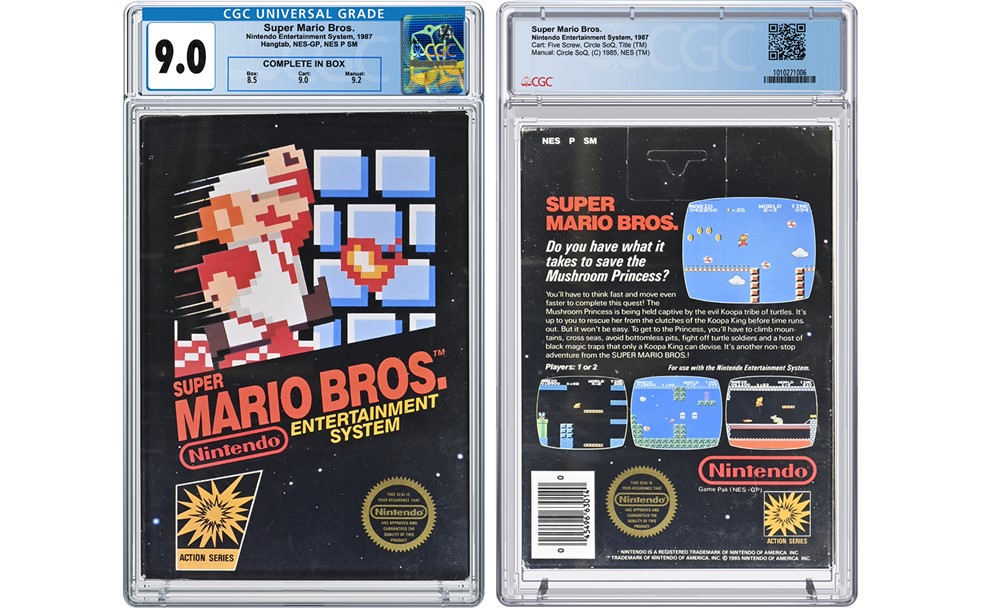
The NES single-handedly redefined the home video game market in the US by requiring strict software approval, packaging and high-quality gameplay, avoiding the issue that Atari had with third-party publishers and poor-quality games. Every game that Nintendo released had the “Nintendo Seal of Quality,” a guarantee from Nintendo that the game consumers were about to buy was consistent with genre icons and box art that matched in-game graphics. To further ensure all their games were up to standard, Nintendo even outfitted the NES with lock-out chips that detected unlicensed games, helping Nintendo avoid the mistakes that Atari had made regarding publishing control.
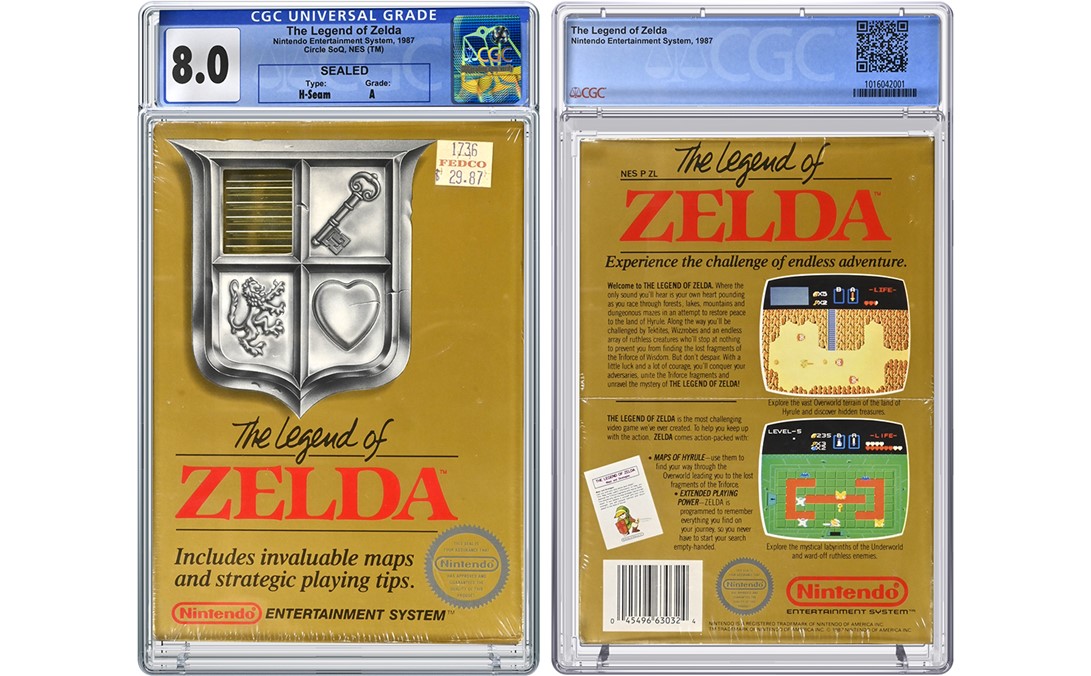
By 1990, more than 30% of US households had an NES compared to the 23% that had personal computers. The games that were released for the NES, including legendary titles such as Super Mario Bros. and The Legend of Zelda, paved the way for multimedia franchises that exploded worldwide, becoming cultural phenomena. Across its lifespan, the Nintendo Entertainment System sold more than 61.9 million units. The NES celebrated its 40th anniversary in October 2025, recognized as one of the most revolutionary, popular and best-selling consoles of all time.
 |
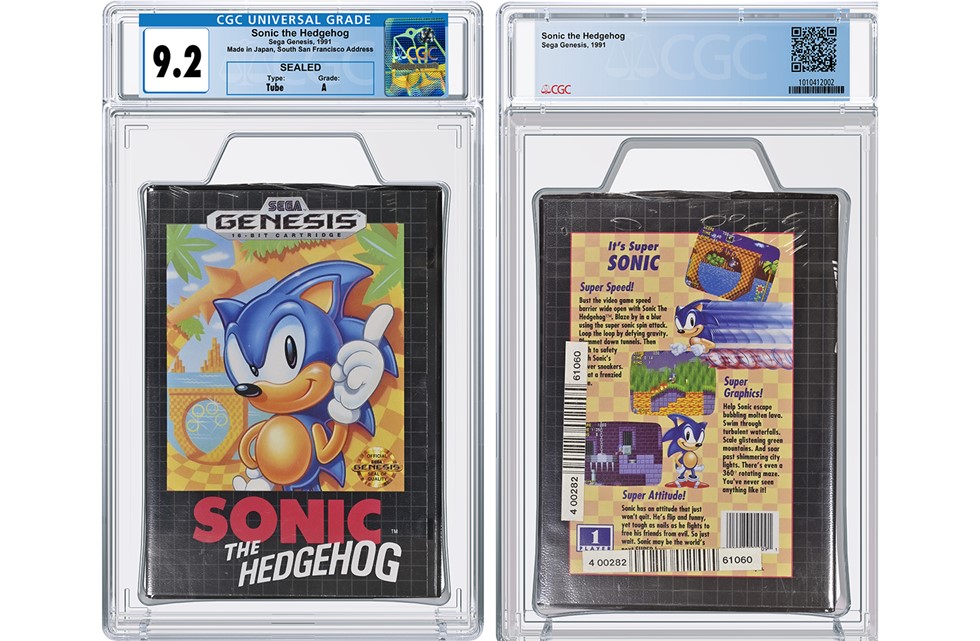
Unbeknownst to the US market, the NES had set the stage for Japanese companies to dominate the US video game market for the foreseeable future. As the NES gained popularity across the world, other companies — both Japanese and otherwise — jumped in with their own creations. One of the NES’s biggest competitors was Sega’s Master System. Though it initially sold poorly in the US, it did pave the way for its successor — the Sega Genesis — which was immensely popular and contended well with Nintendo’s new Super NES during the 1990s. Popular franchises such as Sonic the Hedgehog still persevere in the hearts of video game enthusiasts in America and across the world, with Sonic even appearing in multiple crossover games with Nintendo characters.
 |
After the video game crash of 1983 and Japanese domination of the video game industry, Atari retained less than 30% of the video game market, even with their arcade machines. However, even after being sold and merged with other companies, Atari is still alive and still produces limited video game consoles and products. Atari’s legacy lives on in the form of video game publishing, as well.
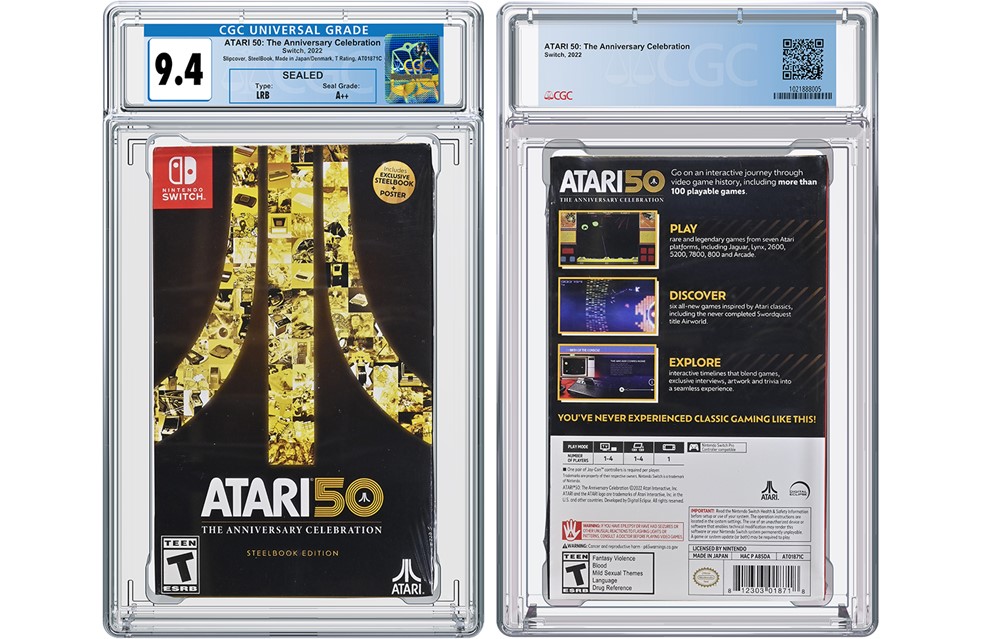
In 2022, Atari, Inc. celebrated its 50th anniversary with the release of Atari 50: The Anniversary Celebration, a video game compilation and interactive documentary about Atari’s history. The game released on Atari VCS (2021), Nintendo Switch, PlayStation 4 and 5, Windows, Xbox One and Xbox Series X/S. The video game includes an interactive timeline of Atari’s history, complete with interviews with former Atari employees, archival footage, more than 100 games from Atari’s library and six new games inspired by Atari’s history. Atari 50 was well-received by veteran and novice video game enthusiasts alike, proving that Atari still has a place in the hearts of many.
 |
Although the video game crash of 1983 was a devastating blow to the industry, it ultimately led to a reformed market that relied on high-quality games and stringent publishing control, paving the way for the industry standards we hold for video games today. The NES and other consoles that were released around that time are still cherished for their role in reforming the market, while original video game enthusiasts still remember Atari and their dominance in the early video game industry in the US, leading many to build collections of sealed and complete in box games for their favorite consoles.
If your video game collection could use some long-lasting protection, consider sending it to CGC for authentication, grading and encapsulation. Grading your games enhances their value while also protecting them from elemental damage and wear and tear. Go here to learn how to submit.
